
Diabetic foot: screening, prevention and rehabilitation
- Diabetes can reduce the sensation and circulation of the foot: ulcers can go unnoticed.
- Preventing an ulcer today means avoiding an amputation tomorrow.
- Screening (simple, painless tests) classifies the risk and sets the frequency of check-ups.
- The podiatrist (first-level Master’s) is essential in the pre- and post-ulcer phases, working with the diabetologist and referral centre.

Prevention is the first step to avoiding complications
It is now well known that, over the course of the disease, diabetes can lead to significant complications in many organs, including the foot.
The Diabetic Foot is a complex syndrome characterised by the progressive loss of pain sensation (sensory neuropathy), by changes in the structure of the foot (motor neuropathy) and by reduced blood flow (peripheral arterial disease).
These conditions increase the risk of developing ulcerative lesions which, because of reduced sensation and poor circulation, can go unnoticed, heal with difficulty, become infected and seriously jeopardise the patient’s health.
The most serious complication is amputation of the limb. This is why preventing an ulcer today means being able to avoid an amputation tomorrow.
This is why it is essential to identify at-risk patients early through a simple podiatric screening, so they can be included in a personalised prevention programme and significantly reduce the likelihood of developing an ulcer.
Diabetic Foot Screening
Screening consists of a series of simple, painless tests that make it possible to assess:
- the foot’s sensation;
- blood circulation;
- the presence of deformities or overload points.

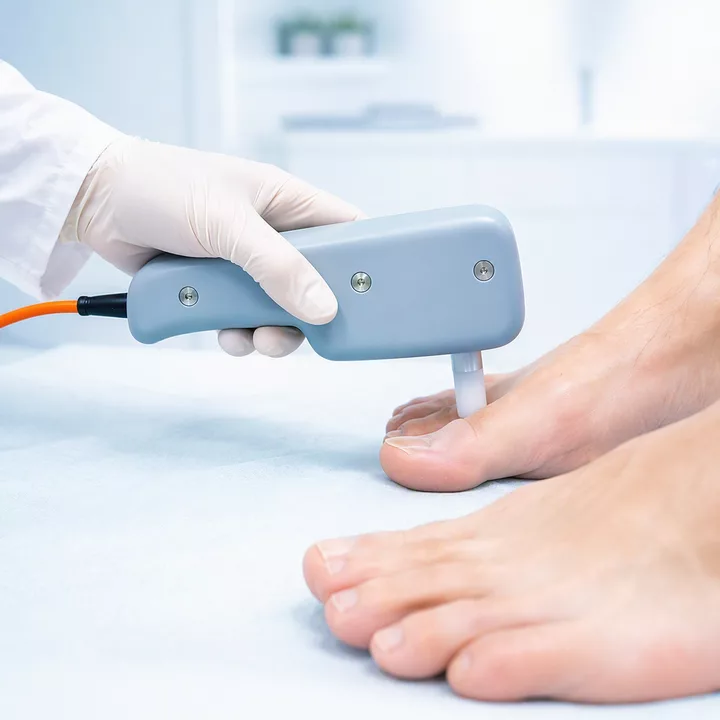

The aim is not only to identify the risk, but to classify the patient according to the most recent international guidelines, defining the correct frequency of check-ups and any need for prompt referral to Specialist Centres in higher-risk cases.
All patients with diabetes should undergo this check periodically, particularly those who have never had an ulcer and have never been assessed by a professional experienced in Diabetic Foot prevention.

The role of the Podiatrist in the community
While the treatment of the Diabetic Foot in the acute phase, that is, when an active ulcer is present, necessarily requires the involvement of a Multidisciplinary Team at a Specialist Centre, it is equally important that the patient can rely on qualified local care in the pre-ulcer and post-ulcer phases, before the lesion appears and after it has healed.
The Podiatrist with specialist training, gained through a first-level University Master’s, has specific skills in prevention, in ulcer risk classification, in clinical monitoring and in the early identification of situations that require urgent referral to a specialist.
Every podiatric visit is an important opportunity for prevention: through a careful clinical assessment it is possible to catch signs of deterioration promptly, adjust the treatment pathway and make a real contribution to saving the limb, preventing progression to ulcerative lesions and their complications.
The podiatrist’s work must be carried out in suitably equipped facilities and in close collaboration with:
- the General Practitioner;
- the Diabetes Centre;
- the Regional Referral Centre for Diabetic Foot Care.
Only a multidisciplinary approach makes it possible to apply effective, personalised treatment strategies at the different stages of the disease.
The key interventions
Depending on the stage of the condition and the patient’s characteristics, the podiatrist can intervene through:
- Ulcer risk classification through clinical screening and neurological and vascular tests.
- Therapeutic education, teaching the correct rules for protecting the foot and for daily self-monitoring.
- Reduction of plantar and dorsal pressures through orthotics and other offloading devices.
- Professional podiatric treatment, with removal of hyperkeratosis and management of the conditions that predispose to ulcer formation.
- Regular check-ups, essential for catching any changes early and acting before they develop into serious lesions.



A warning sign not to underestimate
The presence of a lesion or a very pronounced callus, in the absence of pain, is an important warning sign and calls for a prompt specialist podiatric assessment.
This is precisely why it is essential not to resort to self-treatment with improvised solutions: in the diabetic foot, a wrong, delayed or unsupervised treatment can encourage very dangerous infections which, in the most serious cases, can put the limb at risk. At the first sign, it is always best to rely on the podiatrist.
In the Diabetic Foot, time is crucial: recognising the warning signs early means protecting the foot, preserving its function and, in the most complex cases, making a real contribution to saving the limb.
Frequently asked questions
Does the podiatrist treat diabetic foot ulcers?
What is the monofilament test?
How often should the diabetic foot be checked?

Take care of the diabetic foot
Book an assessment in Osimo or Villa Musone di Loreto: prevention is better than cure.