
← Treatments
Podiatric examination
In brief
- Clinical and instrumental examination of the foot.
- It identifies functional, biomechanical and pathological alterations.
- Tools: onychoscopy/dermoscopy, baropodometry, screening Doppler (ABI index), biothesiometry.
- It is the basis for a personalised treatment plan.
Through a thorough clinical examination and the use of specific instrumental investigations, the podiatric examination aims to identify functional, biomechanical and pathological alterations of the foot, allowing a correct clinical assessment and the definition of a personalised treatment plan.
Prevention is better than cure: do not ignore pain, discomfort or changes in your foot. Acting promptly can prevent more serious problems, more complex treatments and unnecessary suffering. When in doubt, do not wait and do not rely on do-it-yourself solutions: consult a professional.
The clinical examination
The clinical examination includes:
- Assessment of skin changes and of the skin appendages (nails).
- Examination of the joint mobility of the foot and ankle.
- Identification of joint deformities and overload areas.
- Assessment of muscle strength.
- Examination of the deep tendon reflexes.
- Assessment of the peripheral arterial pulses.
The instrumental examinations
The instrumental examinations include:

Podoscope examinationAssessment of the plantar weight-bearing surface and of foot morphology under load.
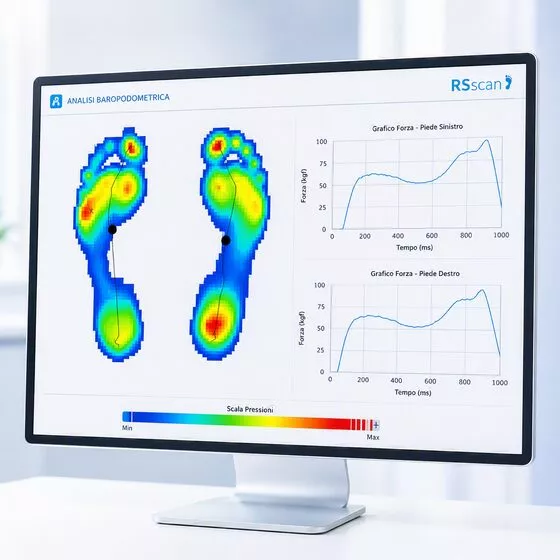
BaropodometryA computerised examination that analyses the distribution of plantar pressures while standing and during walking, making it possible to identify weight-bearing alterations, biomechanical imbalances and functional overload.
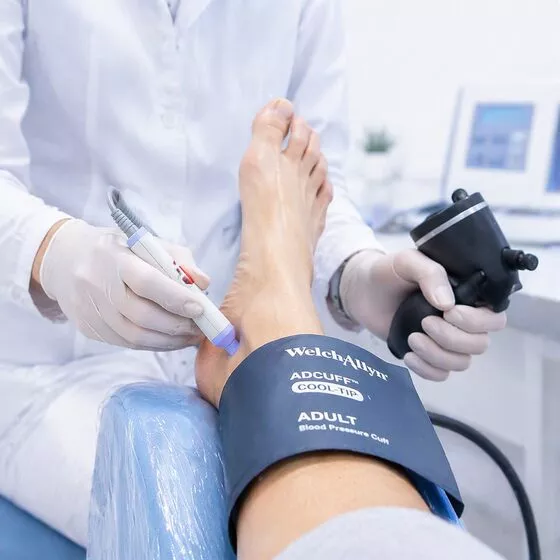
Screening vascular Doppler (Ankle-Brachial Index – ABI)Non-invasive assessment of peripheral arterial circulation by calculating the Ankle-Brachial Index (ABI). It allows early detection of possible peripheral artery disease and is an important screening tool, particularly in diabetic patients and those at vascular risk.
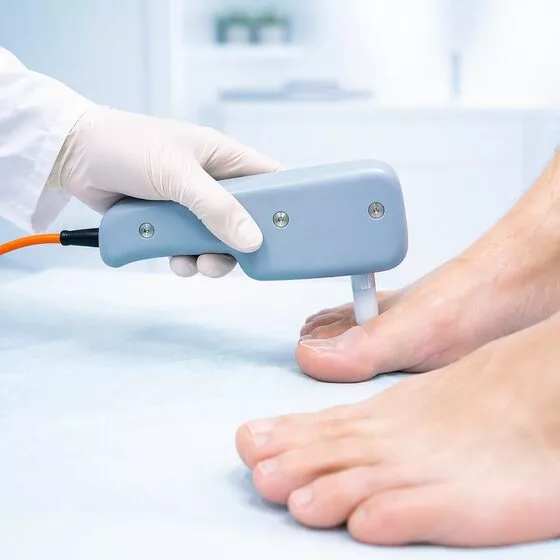
BiothesiometryAn instrumental examination for the quantitative assessment of vibration sensitivity. It allows early identification of peripheral neuropathy and, in patients with diabetes, is one of the main indicators of the risk of ulceration and of developing the diabetic foot.
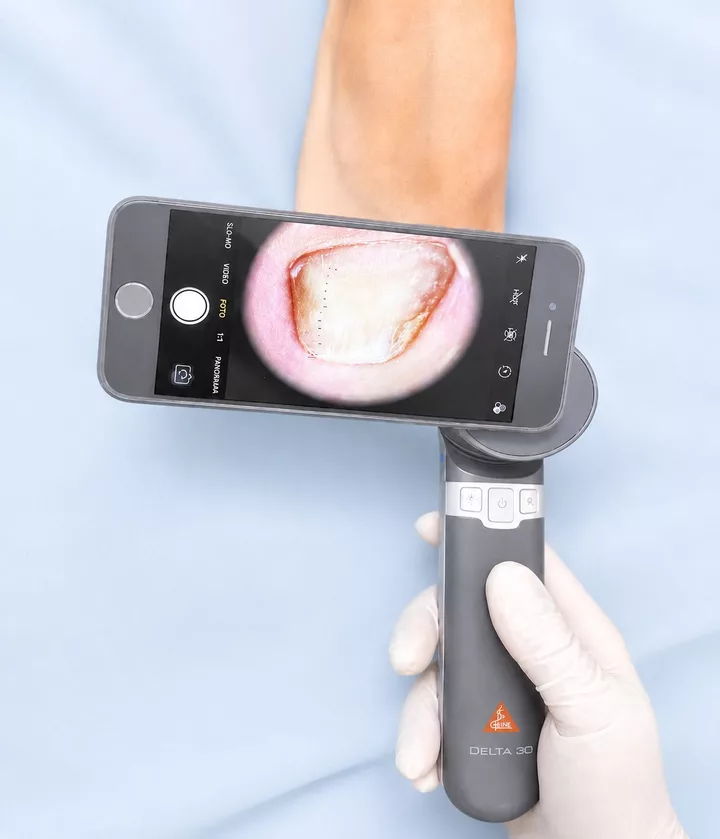
OnychoscopyA non-invasive diagnostic examination performed with a high-magnification dermatoscope, allowing detailed assessment of the nail apparatus. It is essential for identifying specific patterns that guide the classification of nail disorders.

DermoscopyA non-invasive diagnostic examination of the skin performed with a high-magnification dermatoscope, essential for the early analysis of suspicious pigmented lesions, allowing, when necessary, prompt referral to the dermatologist.
Frequently asked questions
What is a podiatric examination?
It is a clinical and instrumental examination of the foot that identifies functional, biomechanical and pathological alterations, for a correct assessment and a personalised treatment plan.
Which instrumental tests does it include?
Depending on the case: onychoscopy and dermoscopy, baropodometry, screening Doppler (ABI) and biothesiometry. They are all non-invasive tests.
Why is it important for the diabetic patient?
Because it allows early detection of peripheral neuropathy and peripheral artery disease (with biothesiometry and ABI Doppler), the main risk factors for the diabetic foot.

Book your podiatric examination
Book an assessment in Osimo or Villa Musone di Loreto: prevention is better than cure.