← Treatments

Toe orthotics

2 min · Dr. Romina Orsetti


In brief

  • Toe orthotics are custom silicone devices for the toes.
  • In adults they protect against deformities and overload.
  • In children they correct misalignment (clinodactyly).
  • Essential in the diabetic foot to prevent lesions.

Silicone orthoses are custom medical devices, made by the podiatrist, both to protect toe deformities in adulthood and to correct toe misalignment in childhood.

In adults
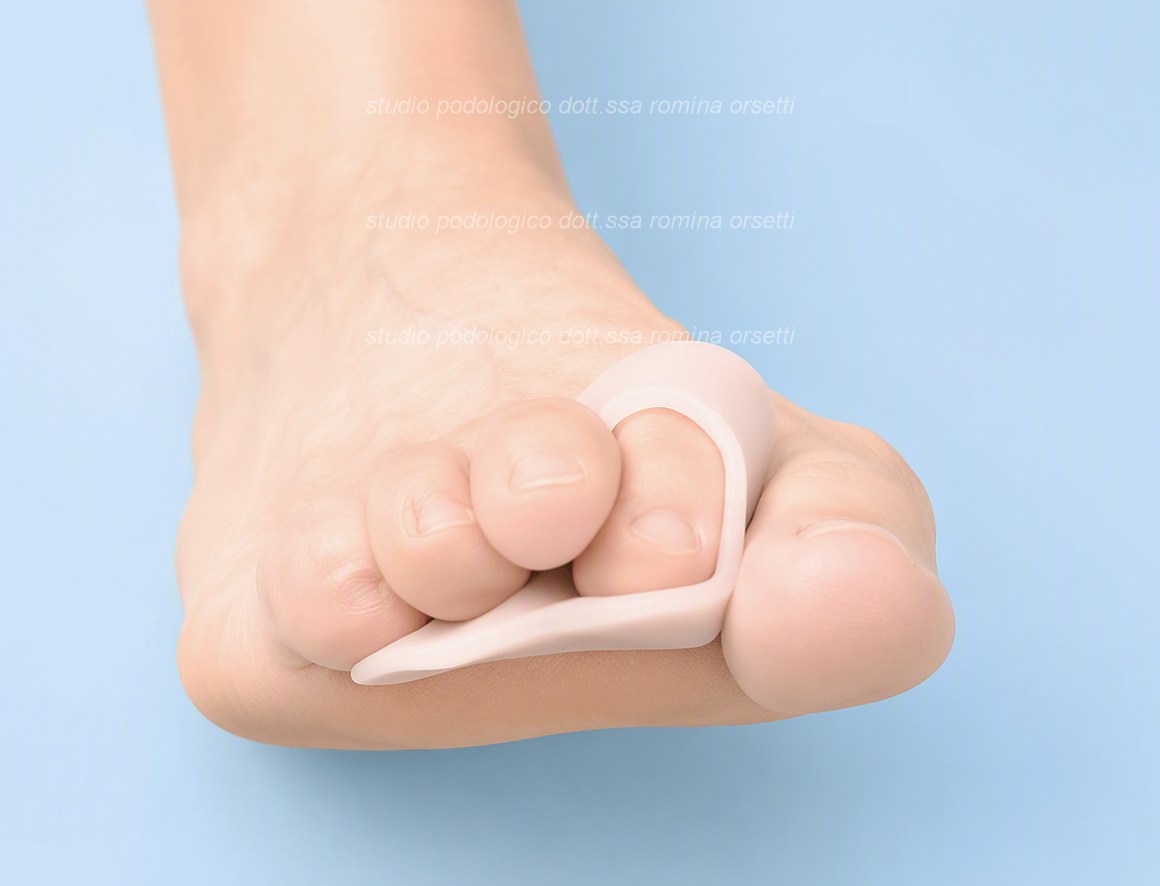
Silicone toe orthosis
The orthosis protects the dorsal surface from rubbing against the shoe and the plantar surface from the overload caused by the toe itself.

In adults they are indicated to reduce local overload and, as a result, relieve pain and prevent the development of new calluses and lesions.

In children

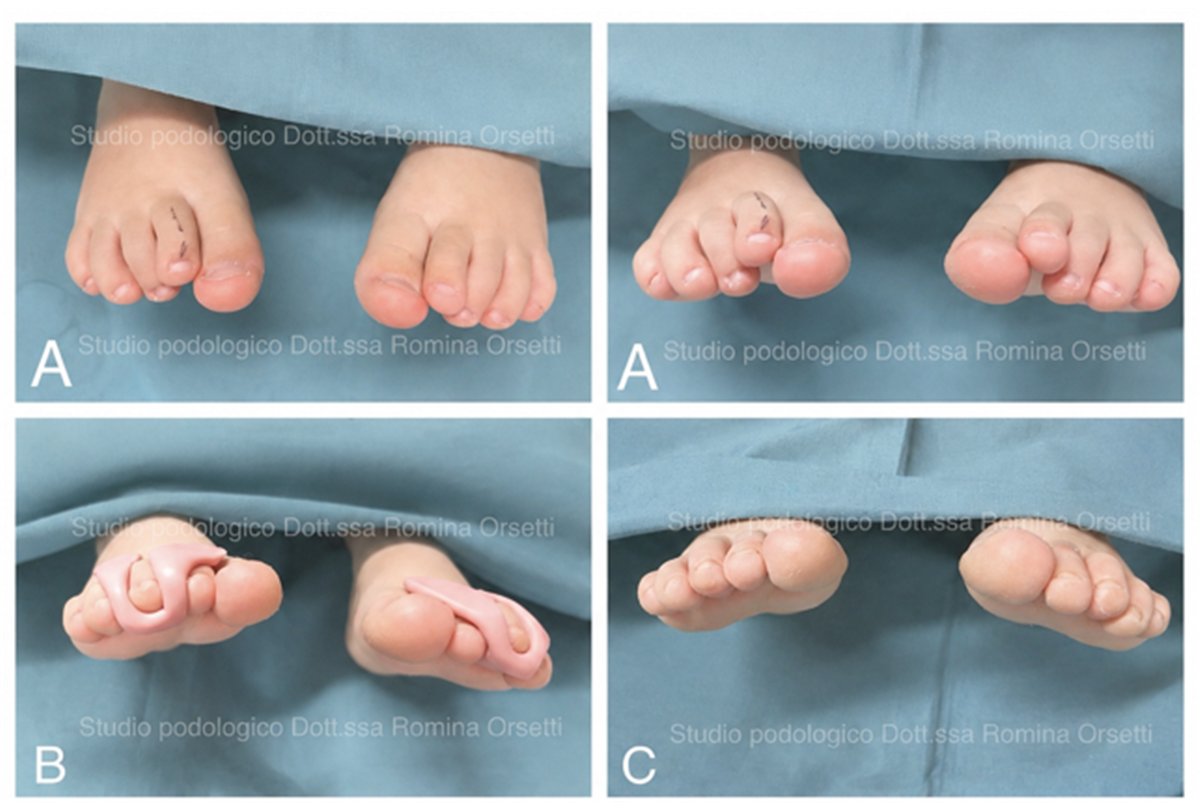
In children they are indicated in childhood clinodactyly, to correct the functional misalignment of the toes and prevent irreducible deformities in adulthood.

In the diabetic foot

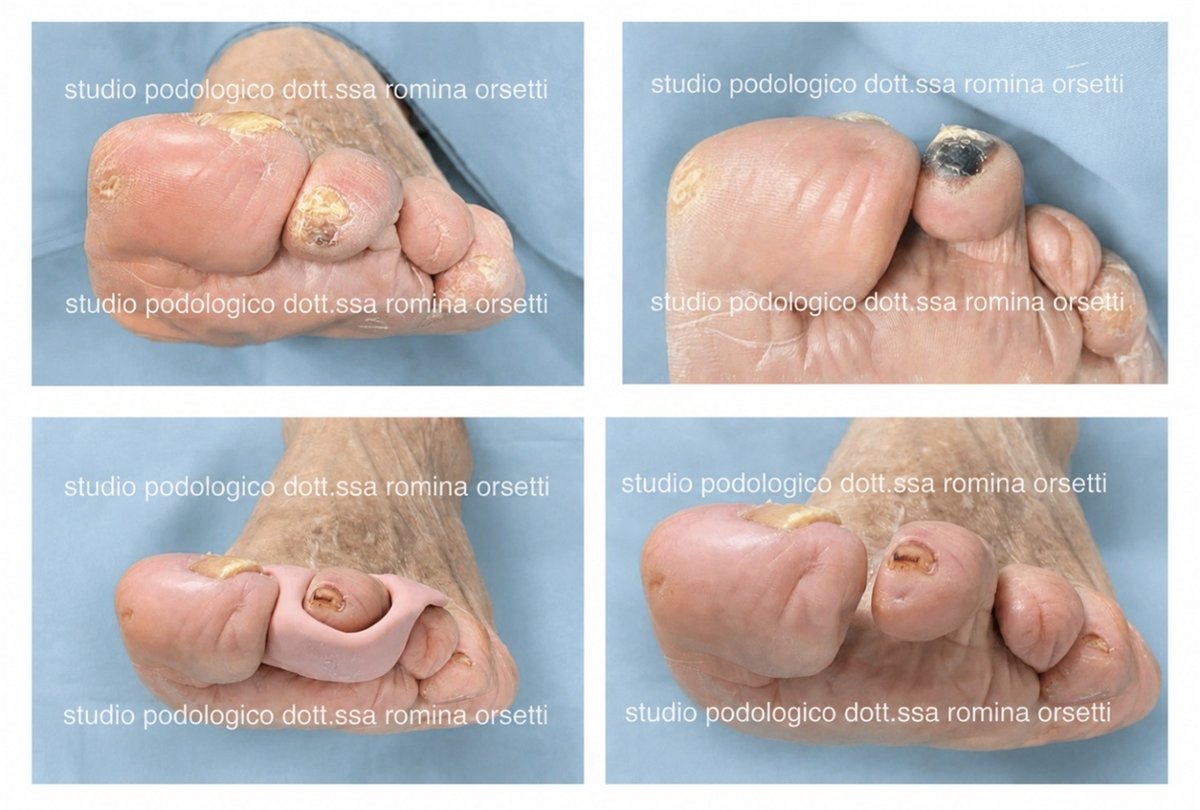
They are essential in the diabetic foot to reduce overload on the toes and prevent the development of ulcerative lesions, as well as to compensate for a partial amputation and prevent a secondary deformity of the neighbouring toes.

How they are made

Making the orthosis starts from a thorough podiatric assessment, which includes diagnosing the deformity and designing the device best suited to the patient’s needs.

The medical-grade silicone used is elastic, durable and well tolerated, ensuring comfort and adaptability to most types of footwear.
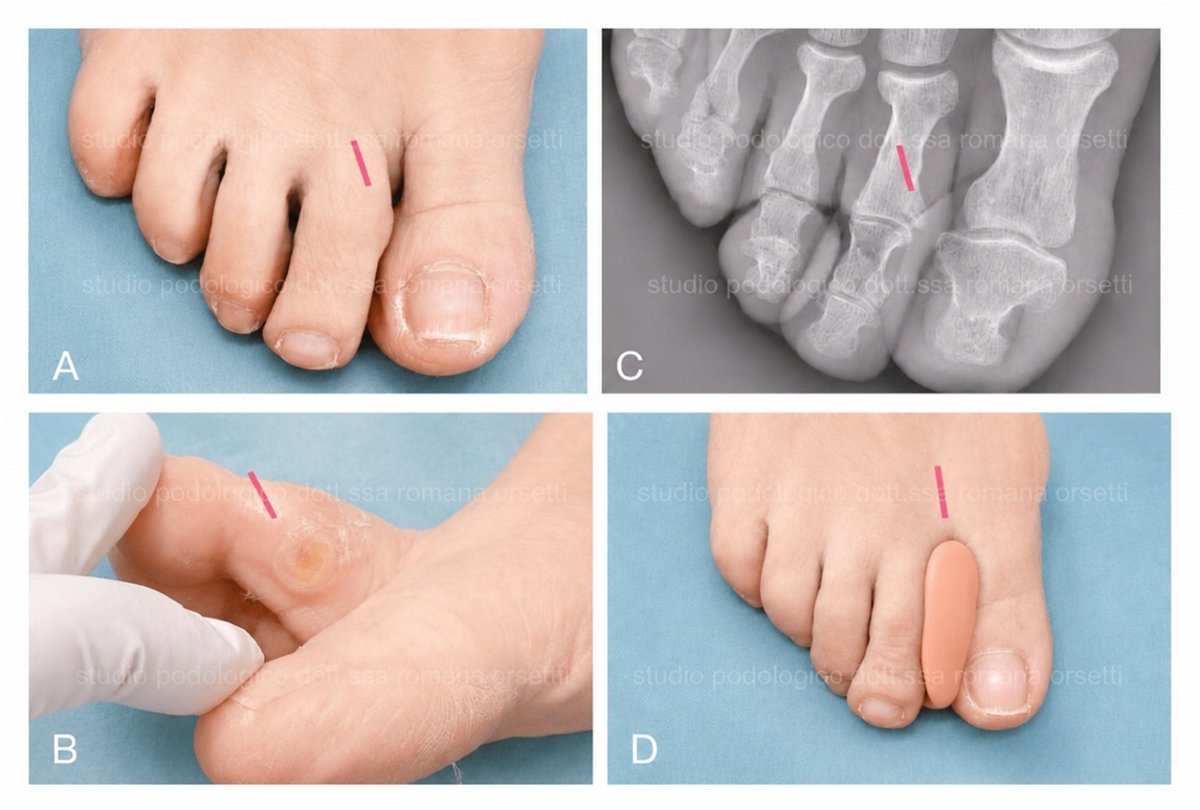
Toe orthosis in an adult: interdigital tyloma from friction
AdultInterdigital tyloma (callus) (B), very painful, caused by friction between the two toes due to an arthritic osteophyte (A and C). Resolved with a custom orthotic treatment (D).
Toe orthosis in a child: childhood clinodactyly
ChildChildhood clinodactyly treated with a custom orthotic therapy. Initial situation (A), orthoses fitted (B), final result (C).
Toe orthosis in the diabetic foot: prevention of an apical lesion
DiabeticPatient with amputation of the 2nd toe and of the distal phalanx of the 4th, with resulting overload on the 3rd. The apical area of the 3rd toe was at risk of an ulcerative lesion, resolved with a custom orthotic treatment.
Toe orthotics require periodic monitoring by the podiatrist, who checks that they remain suitable over time.

Frequently asked questions

What are silicone toe orthotics for?
They protect and realign the toes: they reduce overload and pain, prevent calluses and lesions and, in children, correct misalignment. They are custom-made by the podiatrist.
Are silicone orthoses uncomfortable in shoes?
Medical-grade silicone is elastic, thin and well tolerated: it fits most footwear while ensuring comfort. The podiatrist checks that it remains suitable over time.
Are they useful in the diabetic foot too?

Yes, they are essential: they reduce overload on the toes, prevent ulcerative lesions and compensate for any partial amputations, preventing secondary deformities of the neighbouring toes.
Dr. Romina Orsetti Podiatry Clinic

Content byDr. Romina OrsettiPodiatrist · First-level Master’s in Nail Disorders · over 30 years of experience in foot care · Osimo & Villa Musone di Loreto (AN)

Would you like a custom toe orthosis?

Book an assessment in Osimo or Villa Musone di Loreto: prevention is better than cure.