Foot hygiene and care
- Removing hyperkeratosis (calluses) is a medical procedure: only by a podiatrist.
- Prophylaxis prevents lesions, ulcers and more serious conditions.
- Essential for older adults to reduce the risk of falls, and for people with diabetes to prevent lesions.
- Daily home hygiene matters too.
Professional Hygiene Treatments by the Podiatrist: why they make the difference
Prophylaxis is achieved through hyperkeratotic and nail hygiene treatments.
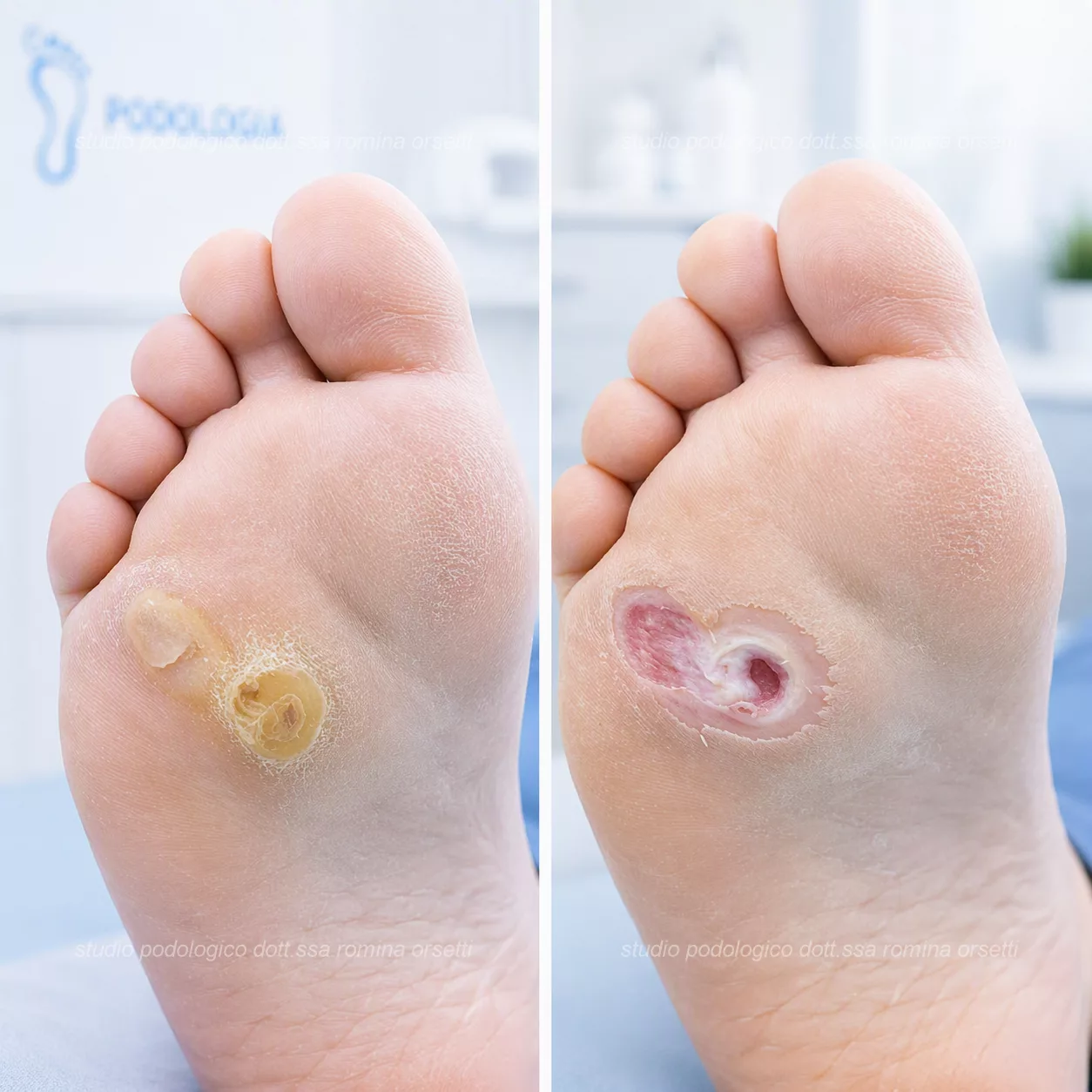
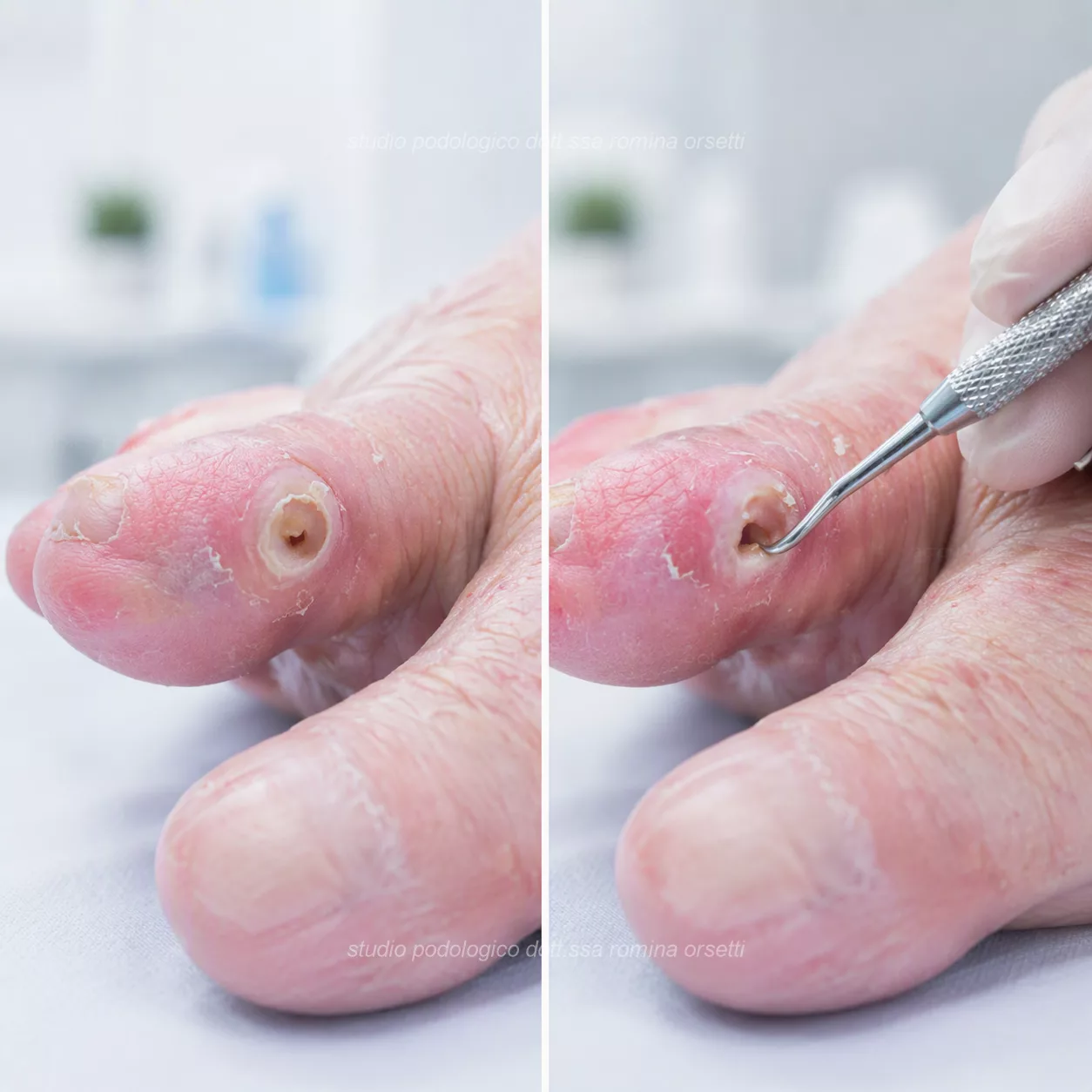
Hyperkeratosis (or calluses) are thickenings of the skin that develop as a protective response, in areas subjected to excessive pressure or friction.
They stop being physiological protection when, excessively developed, they give rise to inflammatory processes and lesions, causing pain.
The treatment of choice is causal, aiming to reduce local pressure through the use of foot and toe orthotic devices.
Sometimes, however, using these devices is not feasible or not sufficient: periodic professional hygiene treatment, aimed at non-invasive removal, then becomes an essential tool for maintaining the health of the foot.
Why prophylaxis matters
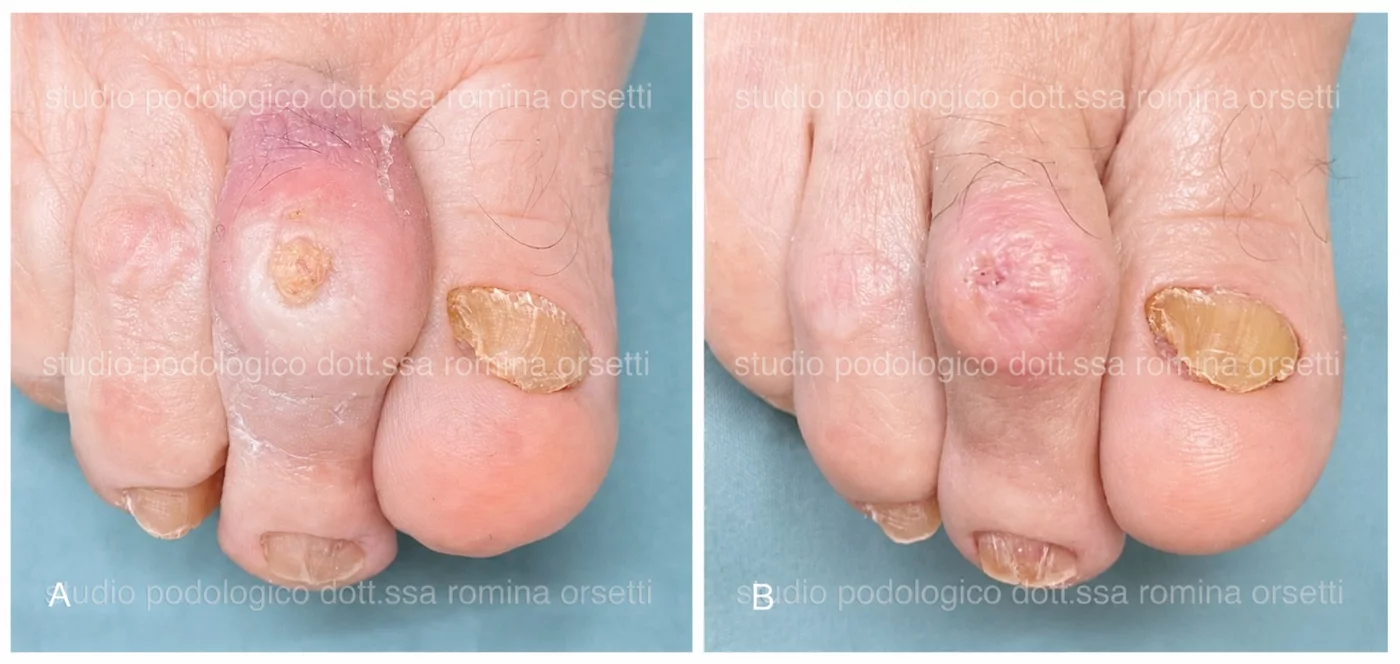
If not treated promptly or properly (that is, by non-medical personnel), hyperkeratosis can lead to more serious conditions, such as bursitis, infections and ulceration.
Their removal is therefore prophylaxis of the utmost importance: in older patients, where foot pain increases the risk of falls; in diabetic patients, to prevent the development of ulcerative lesions.
Moreover, when painful symptoms caused by hyperkeratosis or nail disorders lead to a compensatory postural pattern, they can give rise to problems in other parts of the body.
For the same reason, nail disorders — thickening, deformities, onychophosis — should also be treated periodically.
Home hygiene
Home hygiene is also very important, that is, the hygiene practices the patient should follow at home for proper long-term maintenance.
Proper hygiene, aimed at preserving skin integrity, helps to prevent or correct conditions such as hyperhidrosis, bromhidrosis, fungal infections, fissures, skin cracking and peeling: all conditions that alter its physiology and compromise health.
An equally important point is not to manage lesions and calluses on your own: it is best to avoid improvised drug treatments and do-it-yourself removal with sharp instruments or keratolytic substances (corn removers). Used improperly, these remedies can worsen the situation and encourage even serious infections that are harder to treat. When in doubt, it is always best to rely on a podiatrist.
At the end of each treatment, the podiatrist will give the patient the advice needed to achieve this goal. Proper professional and home hygiene are the foundation of good prophylaxis: they keep the foot healthy and prevent acute pathological conditions.
The podiatrist can help prevent fungal and bacterial infections linked to hyperhidrosis and other foot conditions, providing personalised advice on correct hygiene, sweat management and daily foot care.
Frequently asked questions
Can I remove calluses and hard skin myself?
How often should the hygiene treatment be done?
Is home hygiene important?

Book a professional hygiene treatment
Book an assessment in Osimo or Villa Musone di Loreto: prevention is better than cure.